📄 Digital book in PDF · read it on your phone or print it
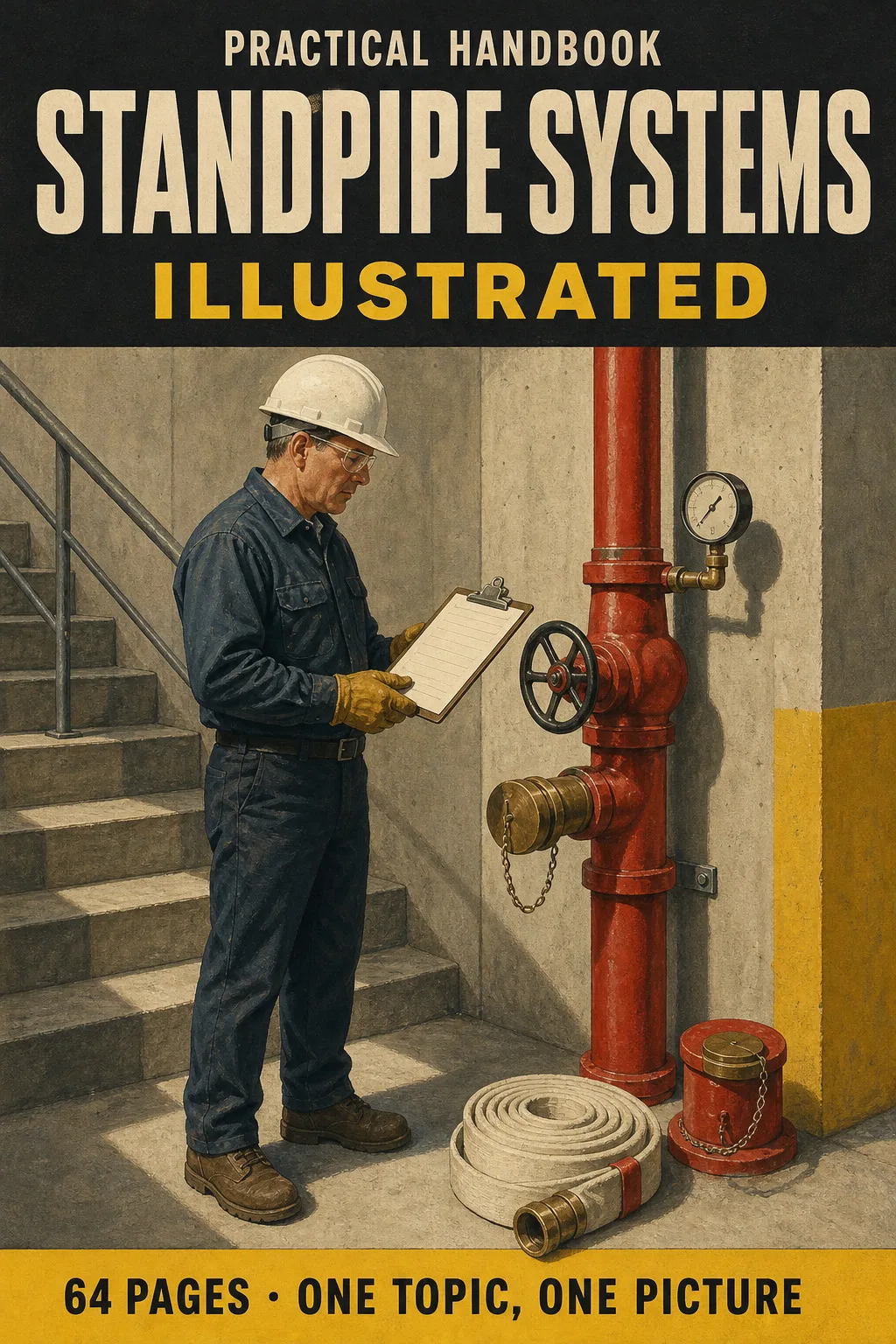
The riser, hose valves, PRVs, the FDC, the flow test from the roof, the hydrostatic test, deficiencies and the report. Each topic has its own page: the drawing first, then what you need to remember. 64 illustrated pages.
🔒 Secure checkout · PDF by email · 30-day guarantee
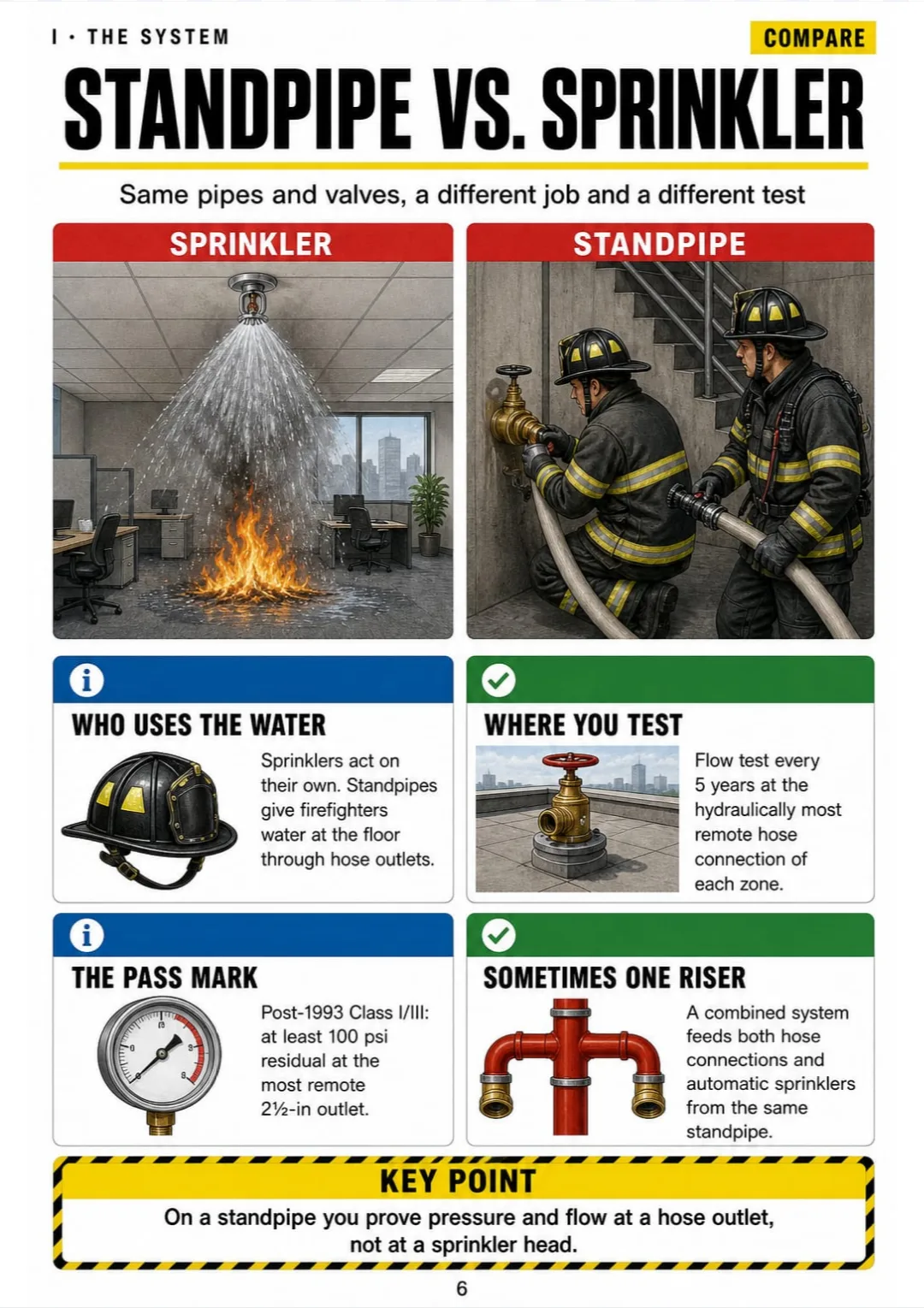
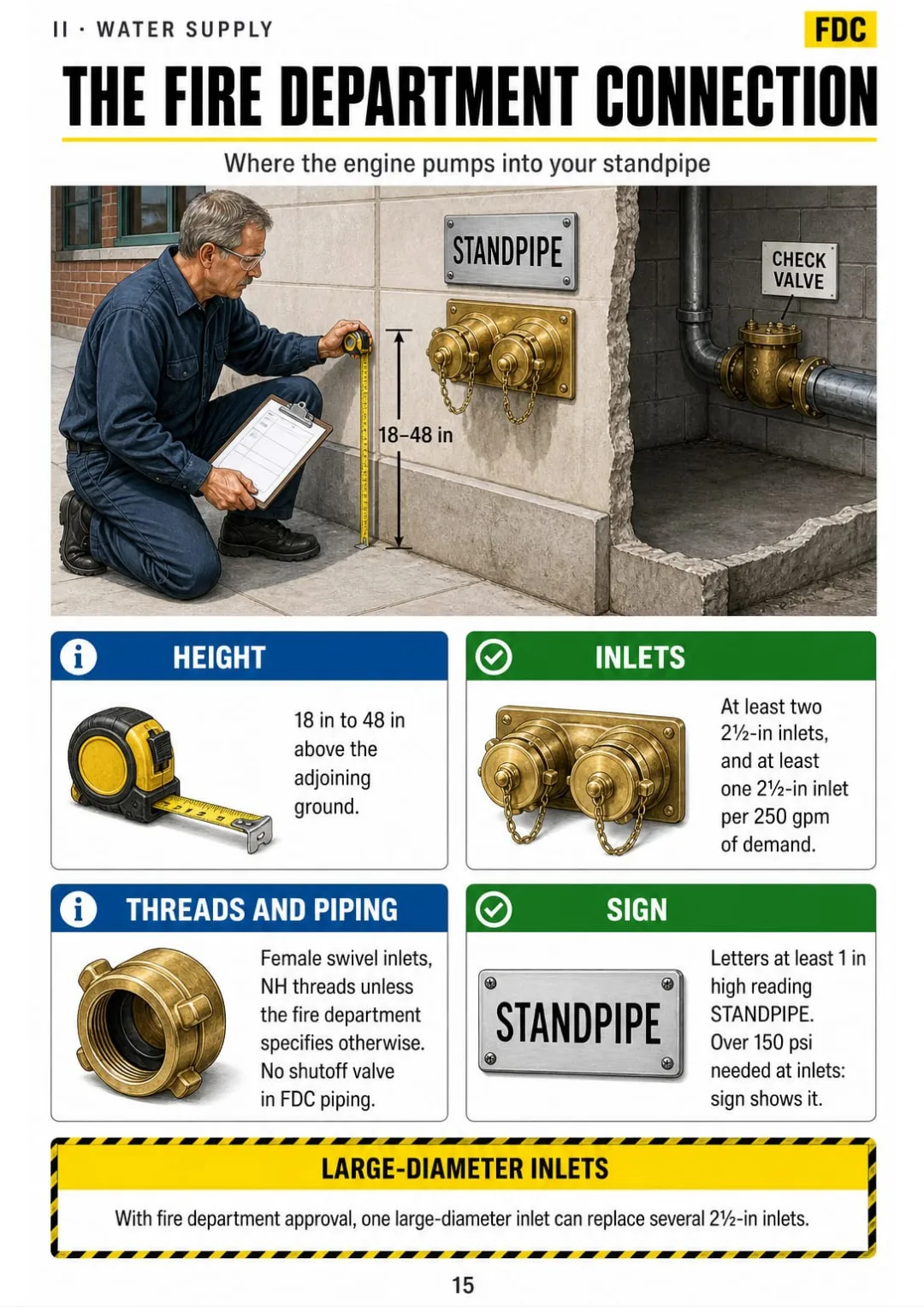
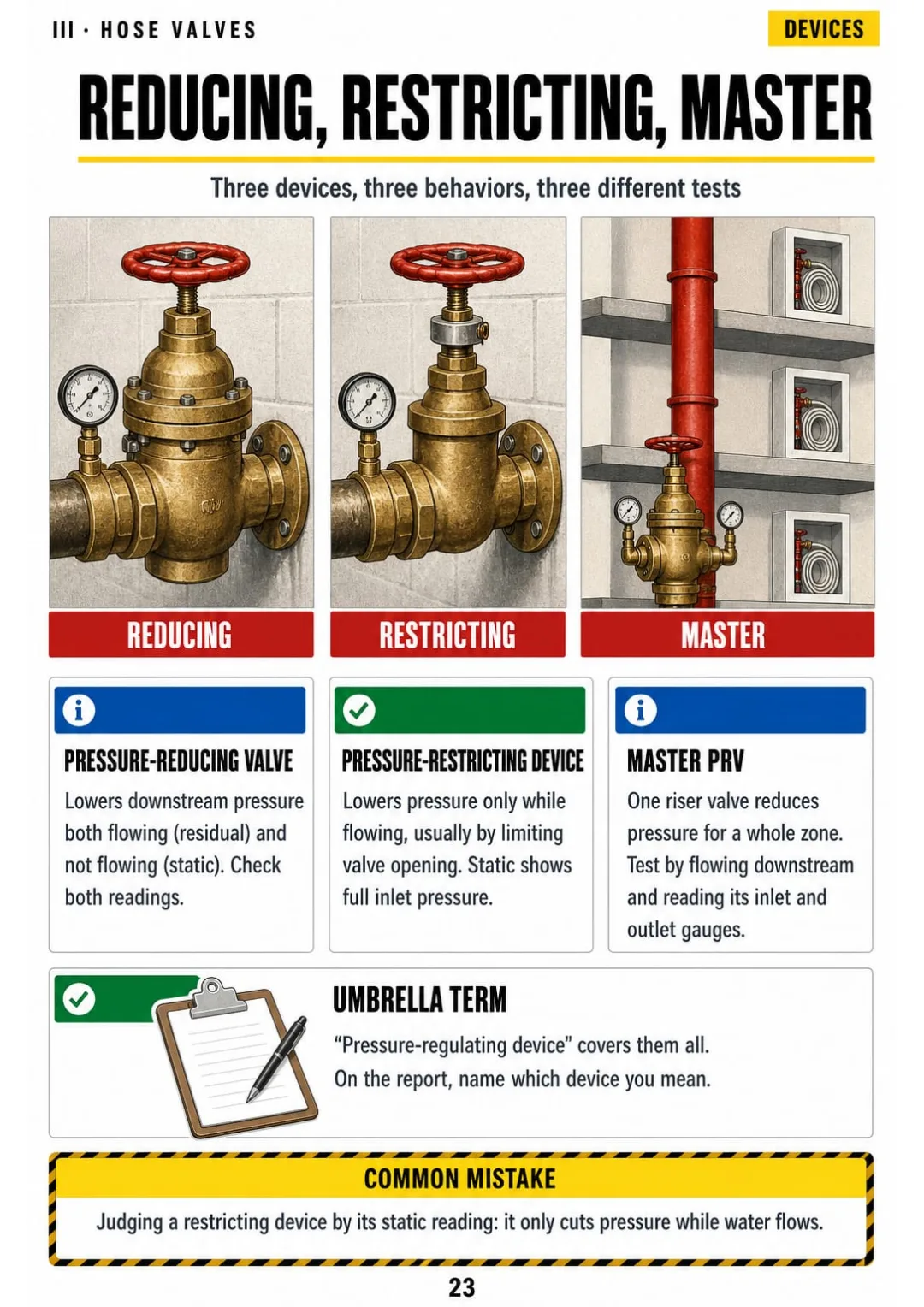
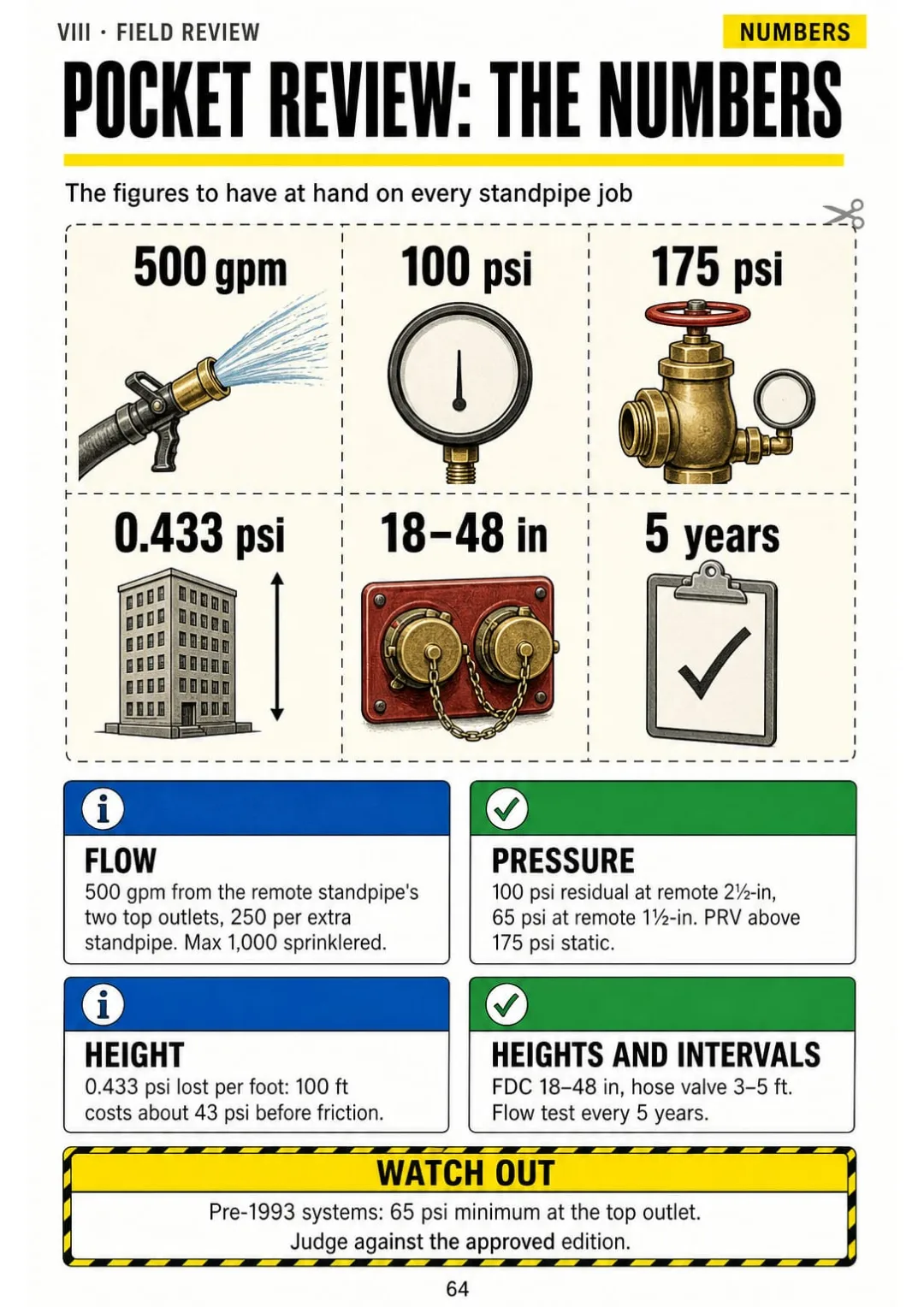
Every page has one big drawing and a box with the numbers and steps you need to know:


Swipe to see more →
These are real pages from the book. The table of contents is the full one: 8 parts and 60 topics.
You're in the stairwell on the 14th floor, in front of a hose valve with a pressure tag on it. You need to know if it cuts static pressure, flowing pressure, or a whole zone before you write a word on the report.
The manual gives you three paragraphs of definitions. Reducing, restricting, master, PRD: the words run together, and every colleague uses them a little differently.

In the book, that's one page. Three valves drawn side by side, each with its gauges: reducing cuts static and flowing pressure, restricting cuts only flowing, master cuts the whole zone.
Same with the FDC, the walkdown order, the flow test from the roof, the hydrostatic test and the deficiency write-up: each one has its own page.
You look at the valve, you know what it is, and you write it up right without going back to the manual.

The system at a glance, water supply and the FDC, hose valves and pressure control, the inspection walkdown, the flow test from the roof, hydrostatic and other tests, deficiencies and the report, and the field review with checklists: 64 pages, all illustrated.
Think of it this way:
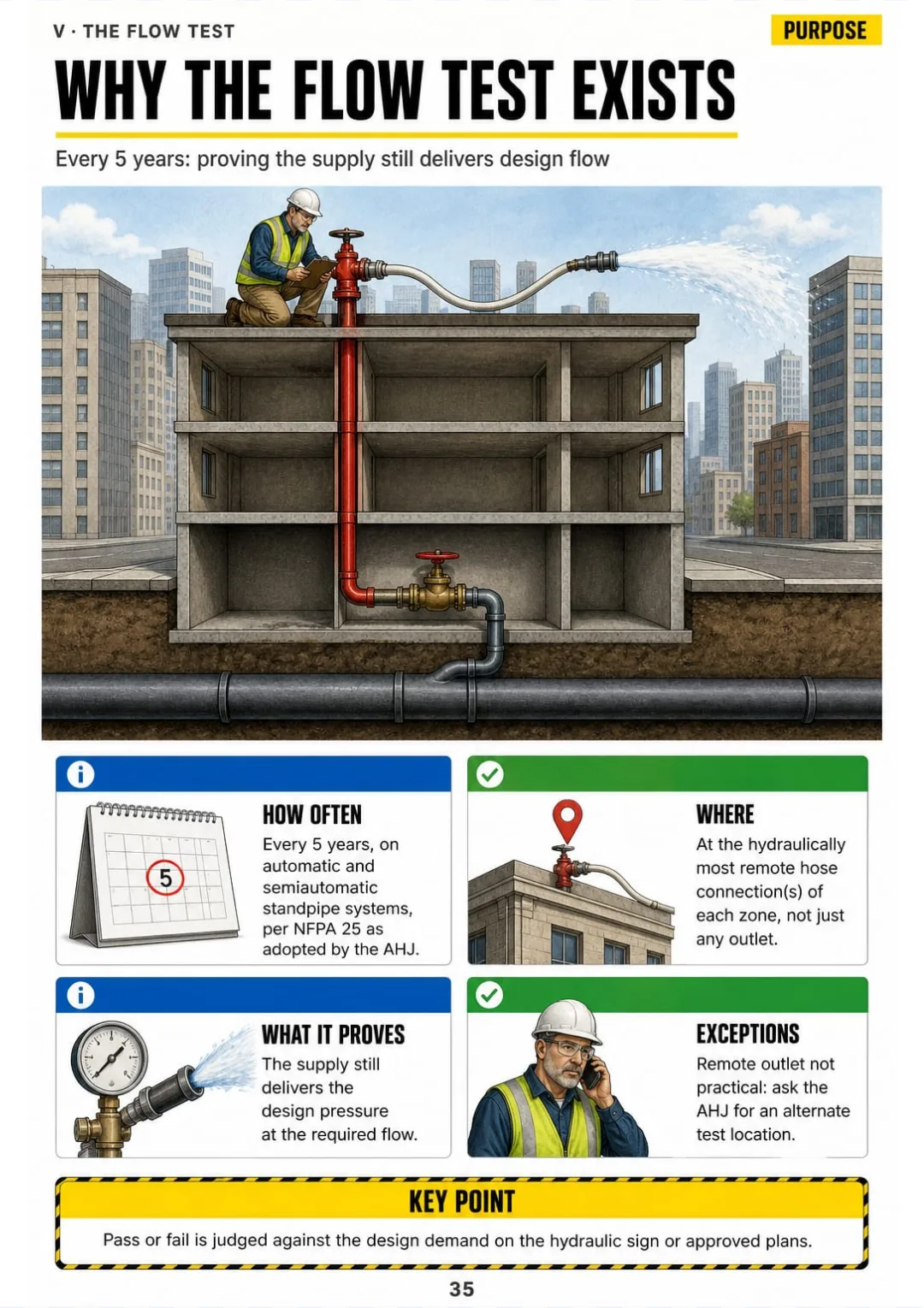
It's the five-year flow test. You're at the roof outlet with the pitot kit, the owner's rep is waiting downstairs, and you need to know which readings to take, and in what order.
You open the book to Step by Step on the Roof and the sequence is drawn: static, open slowly, let it stabilize, pitot and residual, close slowly, record again. The next page turns pitot psi into gpm with a worked example.

Same with the PRV types, the FDC, the hydrostatic test, the testing schedule and the deficiency write-up: each one on its own page.
Standpipe Systems Illustrated is 8 parts and 60 topics, all drawn, and it ends with quarterly and annual checklists, flow and hydrostatic test logs, and a pocket review of the numbers.
What you see drawn, you don't have to memorize.
A standpipe in one drawing, how it differs from a sprinkler system, Class I, II and III, the five system types, wet vs. dry, combined systems and the key numbers.
Where the water comes from, why height costs pressure, the fire pump in one page, the FDC and what a good one looks like, pressure zones in high-rises and supply control valves.
Know which valve you're looking at before you write a word: the 2½-in hose valve and where it goes, the 1½-in hose station, why PRVs exist, reducing vs. restricting vs. master, reading a setting, caps, threads and adapters.
The walkdown in order: control valves, gauges, piping and hangers, hose connections floor by floor, cabinets, signs and the extra checks on dry systems.
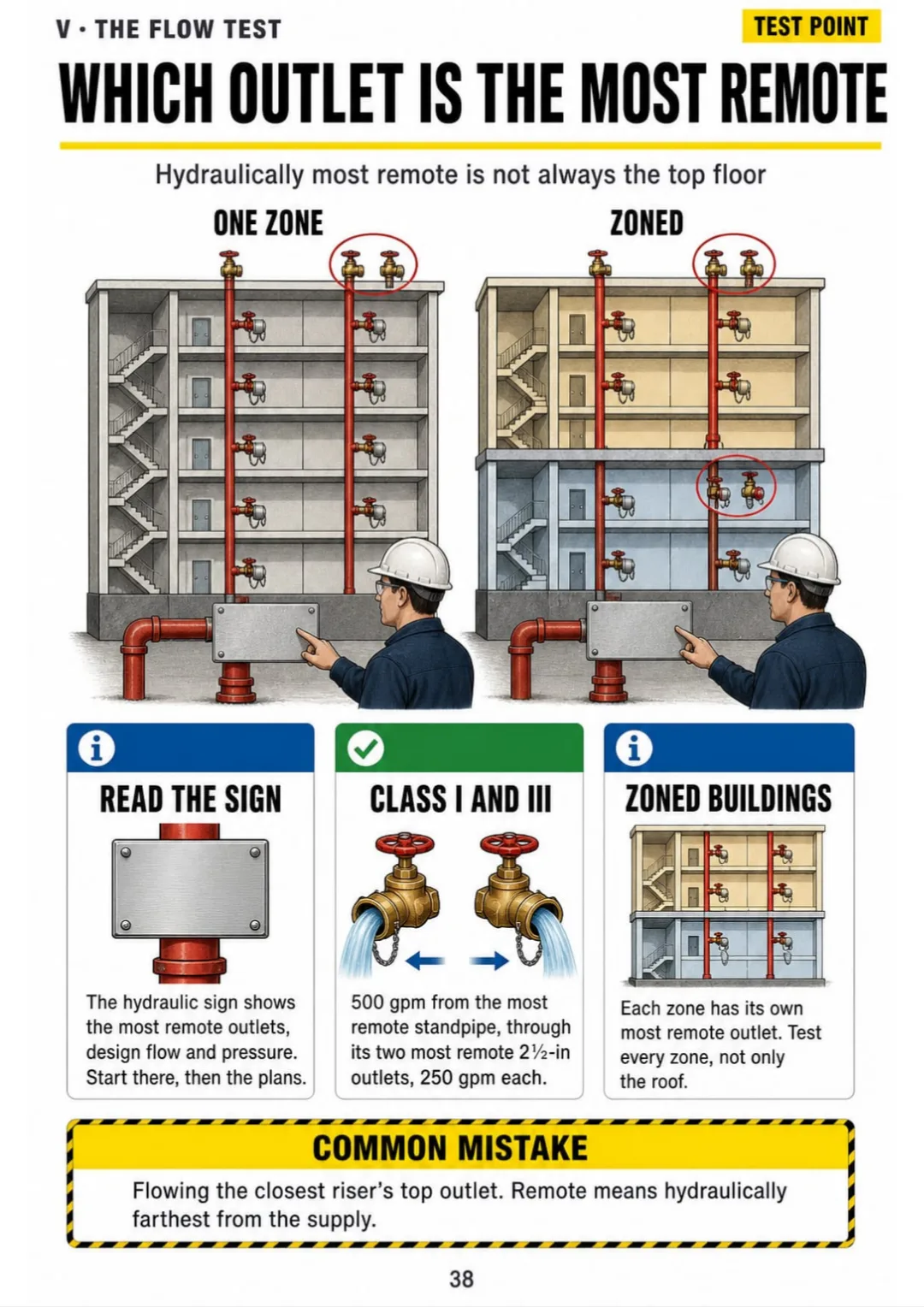
Run the roof flow test without second-guessing: why it exists, prep and kit, finding the most remote outlet, static, residual and pitot, the sequence step by step, pitot psi to gpm and a worked pass/fail example.
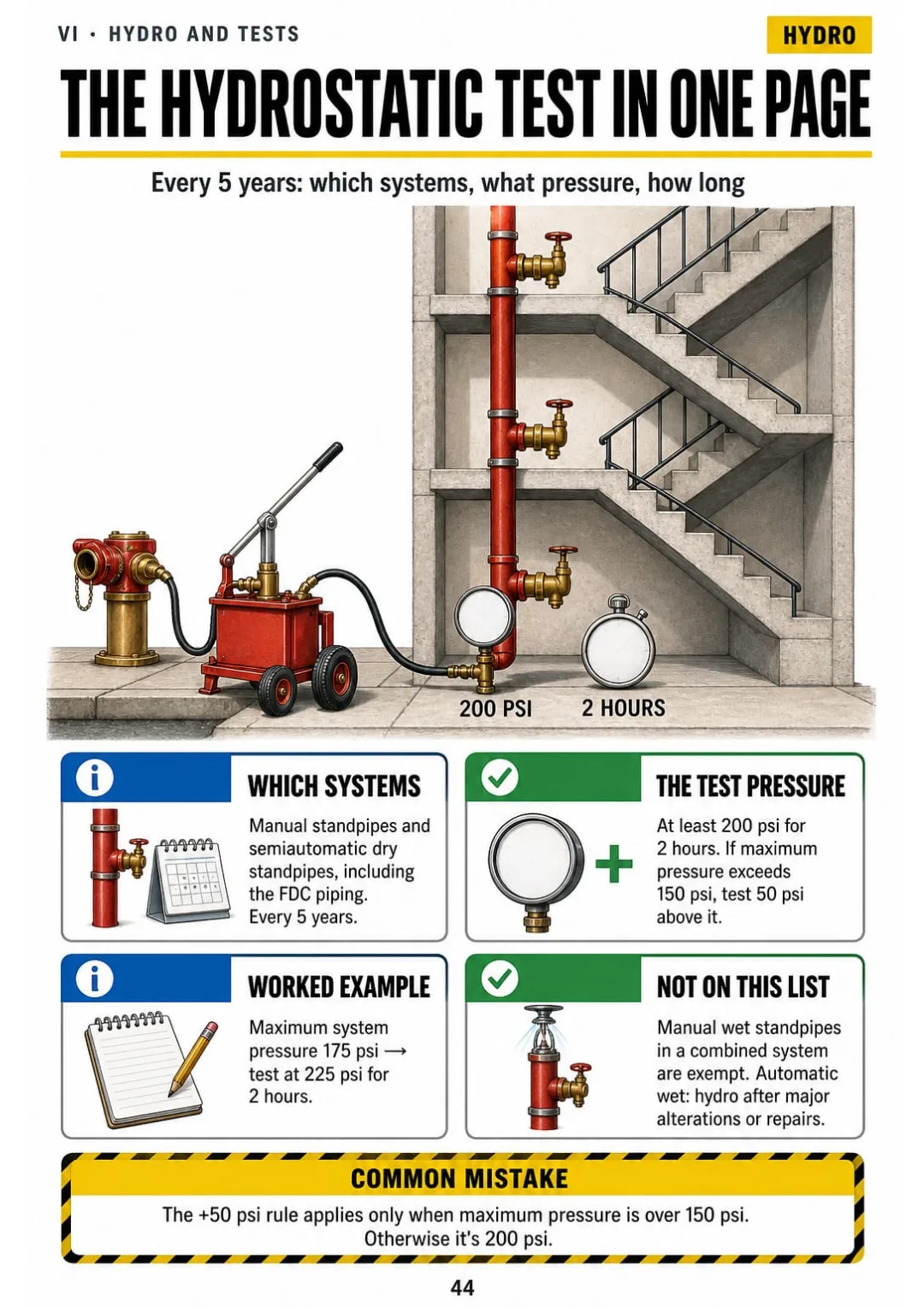
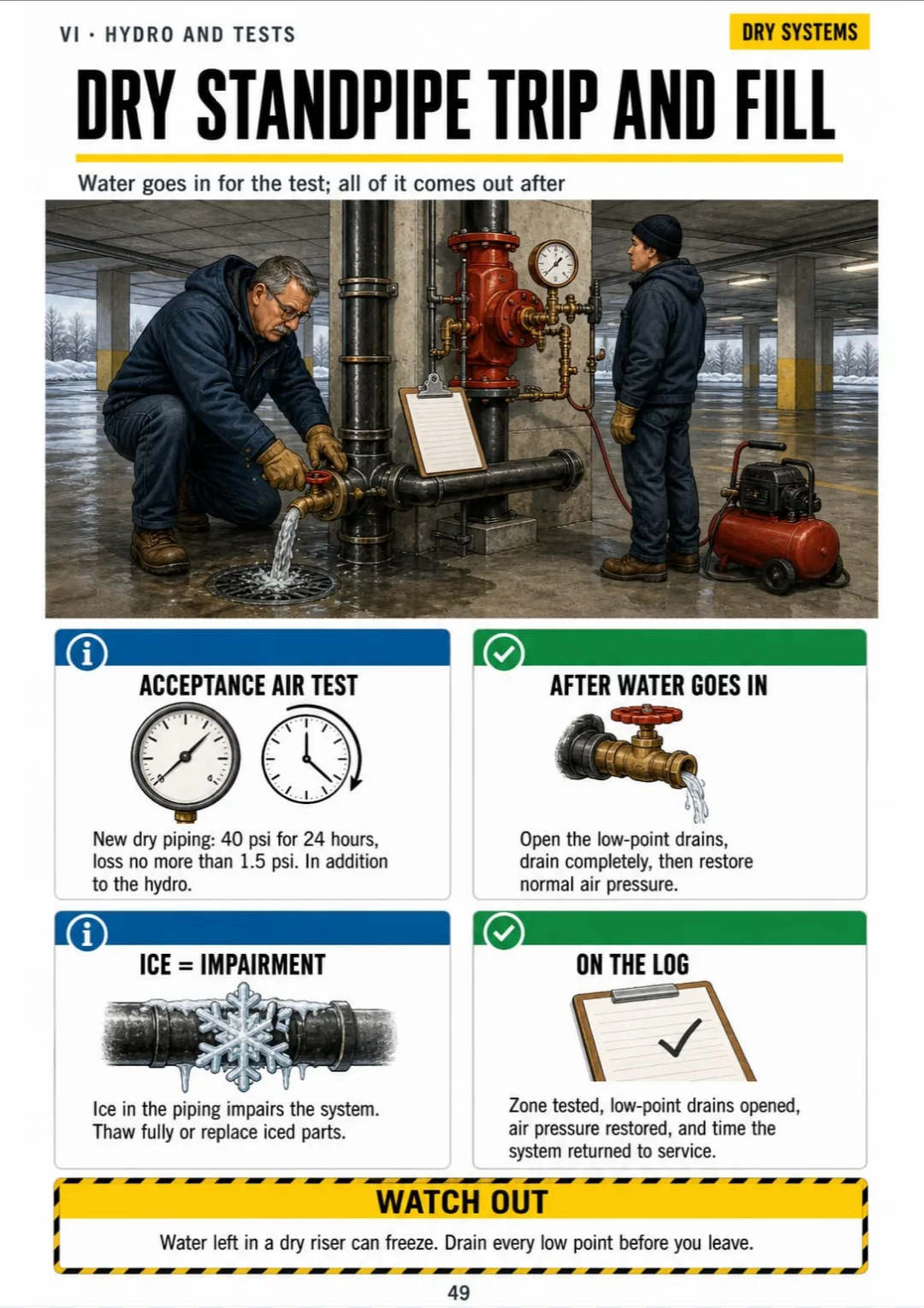
The hydrostatic test, setup and gauge reading, the main drain test, hose valve and PRV tests, the dry standpipe trip and fill, and the full schedule on one page.
Impairment, critical and noncritical, the most frequent deficiencies, how to write one up, a failed flow test, the impairment procedure, talking to the owner and what to keep on file.
The whole system again at a glance, common mistakes on the job, quarterly and annual checklists, flow and hydrostatic test logs, and a pocket review of the numbers.
At the end of the book: Quarterly and annual checklists, flow test and hydrostatic test logs, and a pocket review of the numbers.
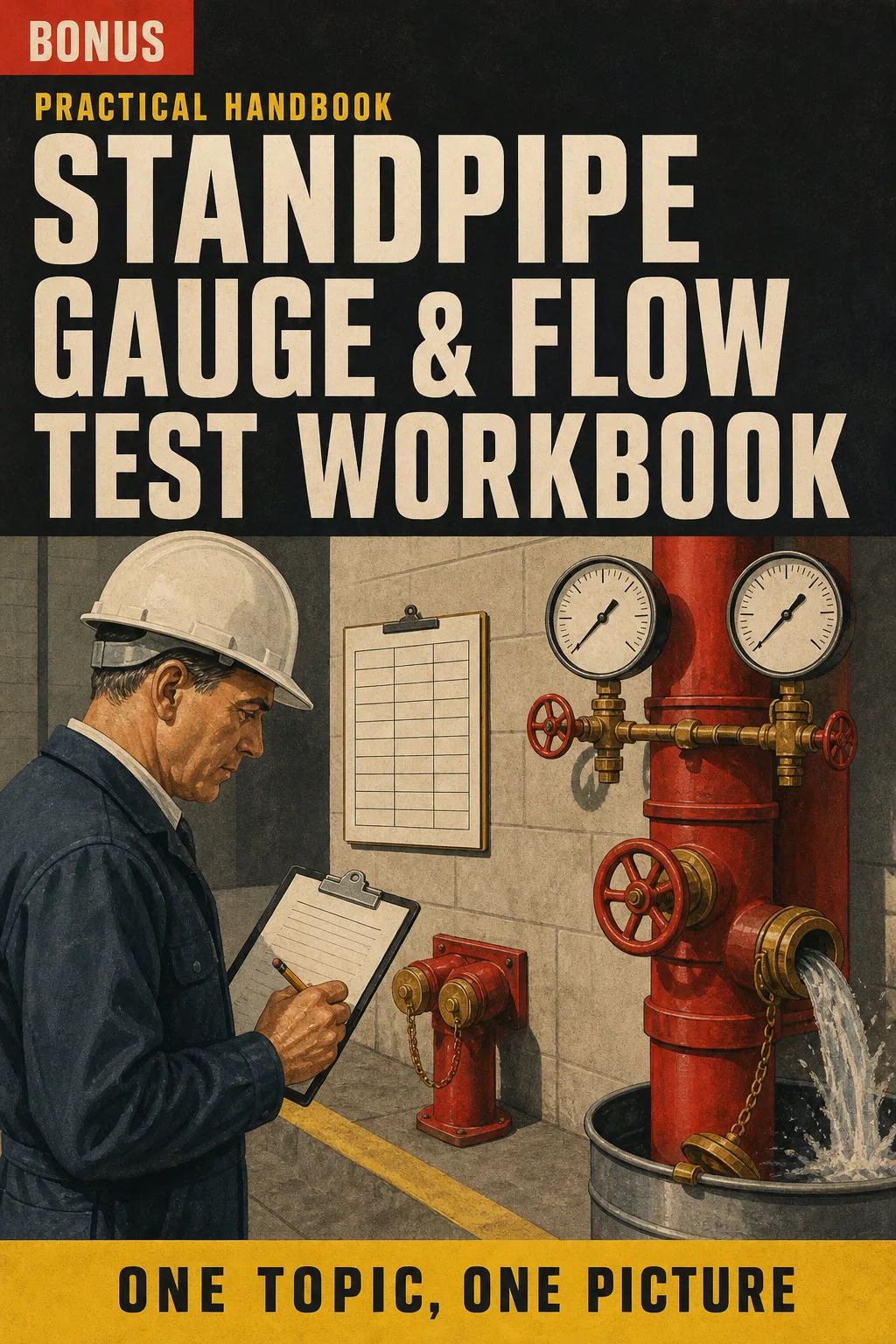
Practice reading gauges and filling in flow and hydrostatic test logs with worked psi and gpm examples, so the numbers make sense before you're on the roof.

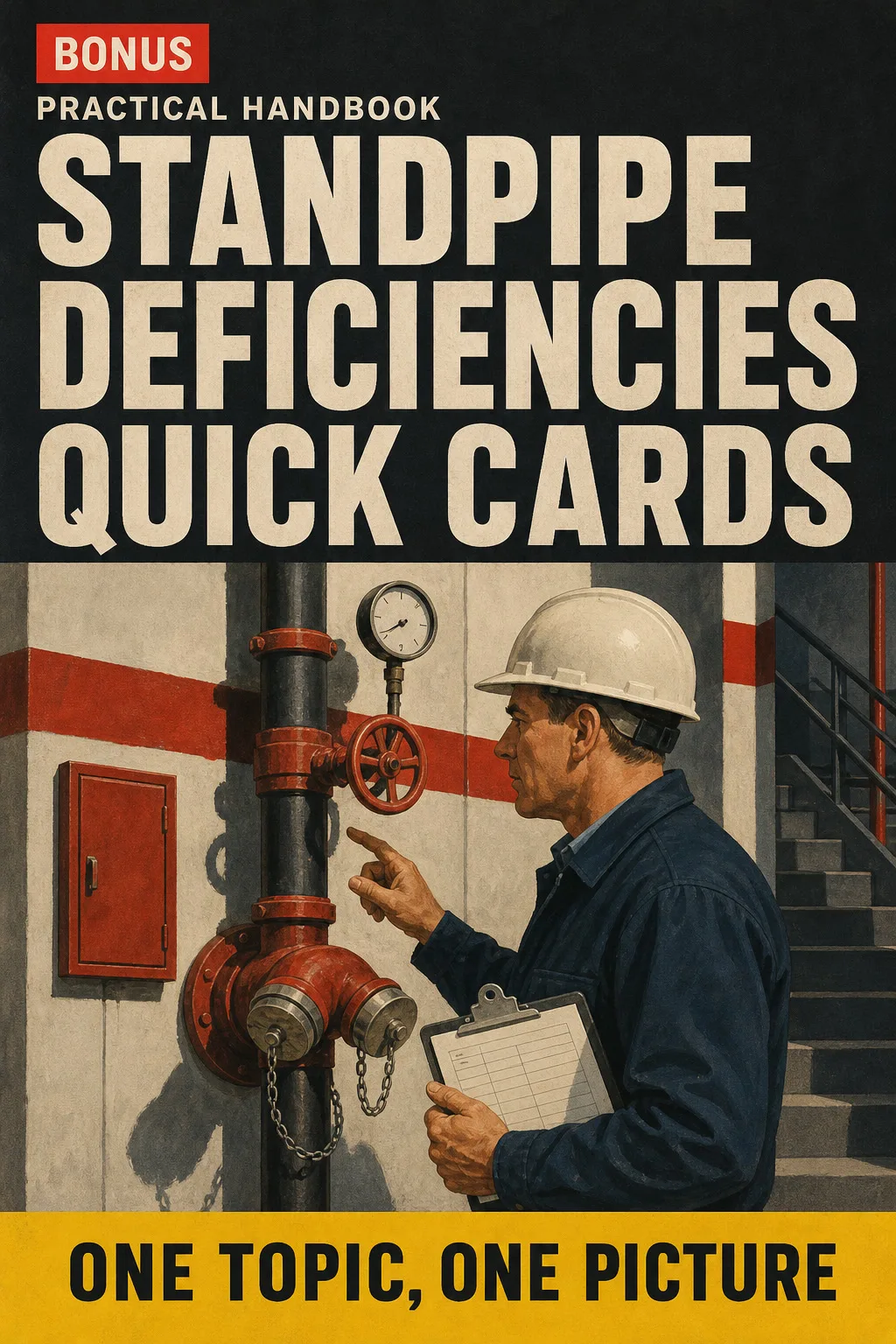
Every common deficiency on one card each: the symptom, what it means and how to write it up, ready to check at a glance on the job.
📄 This is a digital PDF book sent to your email: nothing is printed or shipped.
PDF by email: We email you Standpipe Systems Illustrated as a PDF, together with the two free books. It's a single payment: no installments, no extra charges.
You came up through sprinklers and now get sent to risers and hose valves. The book lays out the whole system, one drawing per topic, in the order you'll work it.
Before you go up to the roof, you review the sequence, the readings and the pitot math on two pages, with a worked example in psi and gpm.
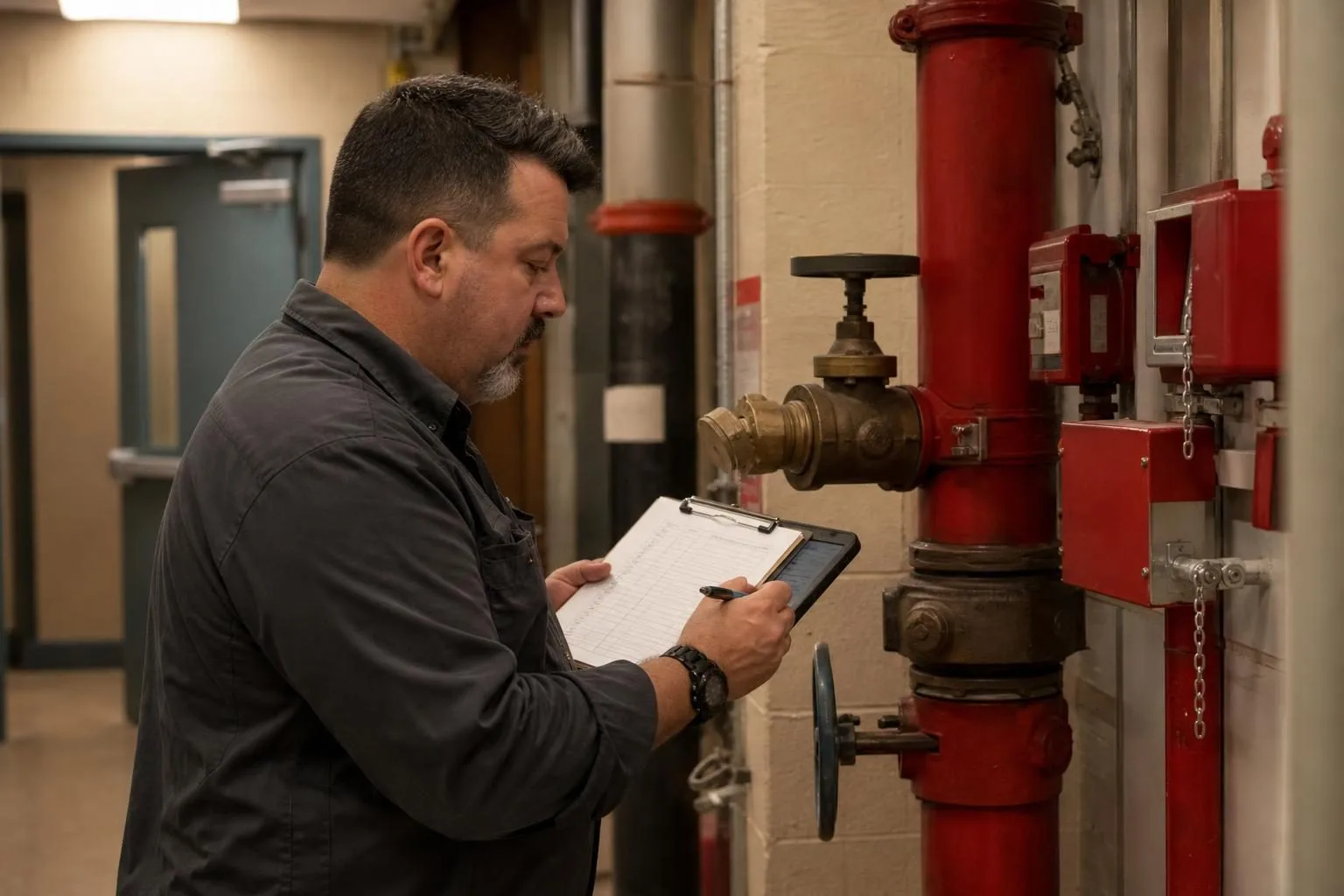
As a building engineer, you keep the standpipe ready between inspections. You know what to look at, what counts as a deficiency and what to tell the owner.
📄 This is a digital PDF book sent to your email: nothing is printed or shipped.
Try Standpipe Systems Illustrated for 30 days, bonus books included.
We refund everything if the file won't open, if the book isn't what you see here, if you were charged twice or if the email doesn't arrive. Just email us.
You pay once. No subscriptions.
Yes. It isn't a beginner course: it starts with the system in one drawing and goes straight to the walkdown, the tests and the report. It also works for building engineers who look after a standpipe between inspections.
It follows the current editions of NFPA 14 and NFPA 25. Many AHJs still enforce an earlier edition or local amendments, so check which edition yours has adopted: where they differ, your AHJ has the final word, not the book.
No. It's an independent illustrated reference, not affiliated with or endorsed by NFPA or any authority.
No. It doesn't replace your company's training, the manufacturer's instructions, the standards themselves or your AHJ. What it adds: the standard tells you what's required, the manual covers one product. The book draws where each part is, what to read, in what order, and how to write it up, one topic per page.
No. The workbook exercises and worked examples are written for this book. They aren't questions from any exam or official test, and the book doesn't come with a certificate, NICET credit or CEUs.
The book and the 2 bonus books come as PDFs by email, to the address you enter at checkout.
No. It's a one-time payment.
Yes. The PDF prints on regular letter paper, so you can keep the pages and checklists in the truck.
You have 30 days. We refund everything if the file won't open, if the book isn't what you see on this page, if you were charged twice or if the email doesn't arrive: just email us.
No more rereading the standard with nothing sticking.
The PRV, the FDC and the roof test: you see them drawn, and that's it.
You walk into the building knowing where everything is.
Drawings make studying faster.
The book is right below.
One-time payment: US$ 27 · Guarantee: 30 days · PDF by email
YES, I WANT STANDPIPE SYSTEMS ILLUSTRATED FOR US$ 27📄 This is a digital PDF book sent to your email: nothing is printed or shipped.